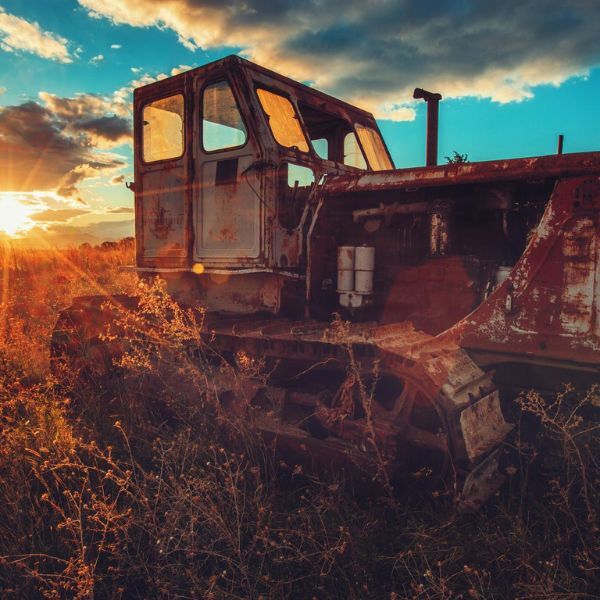
You’ve most likely seen the BEFORE and AFTER photos of restored tractors. The BEFORE photo being one of a rusty old wreck with flat tires, and the AFTER photo showing a stunning restoration of an awe-inspiring classic tractor that turns heads wherever it goes. Deciding on whether a tractor is worth restoring depends on your capabilities and interests, your goals for doing a tractor restoration and the condition of the tractor you’re considering restoring. If the idea of undertaking a tractor restoration is tempting, here are some tips to steer you in the right direction.
Know your capabilities and interest in tractor restoration work
The first thing you need to evaluate is yourself. While everyone loves to admire a beautifully restored tractor, not everyone has the know-how and passion to make it happen. This is one of those times you need to be honest with yourself.
The skill issue is easier to manage. In fact, a tractor restoration project is a good time to challenge yourself in acquiring new skills. With the help of YouTube videos and fellow tractor enthusiasts, a successful tractor restoration for the first timer is easier to do than it has ever been before.
The interest issue is a different matter. Some people enjoy fixing and tinkering during the restoration process, while others find it frustrating. Simply knowing yourself will help you determine whether you’re likely to follow through and complete the project or abandon it in midstream. You can always acquire new skills and knowledge, but it’s hard to stimulate interest if you simply don’t have it in the first place.
Understand your goals for doing a tractor restoration
What are your goals for the restoration? Do you want to simply own a beautifully restored tractor, or would you like to flip it to make money? For many models, tractor restoration is a passion project, not a profit source. For certain rare or high-demand models, there may be exceptions. Now if you master the skills for tractor restoration, you might be able to profit from that by working on projects for other people someday.
Evaluate the condition of the tractor
Once you find your tractor, give it a thorough inspection to see how it looks. You’ll want to make sure you get something with the potential for a successful restoration and not just a heap of scrap metal. Don’t worry about components like starters, alternators, solenoids, voltage regulators, water pumps, radiators and fuel pumps. These items, in addition to mufflers, clutches and axle components, are readily available as replacement parts, even for many older tractor models. As a matter of fact, there is a whole industry supplying replacement parts for tractor restoration.
When should you walk away and leave an old tractor in the field or barn where it’s been sitting for years? If the frame shows severe cracking, it may be beyond the point of no return. Minor cracking can be repaired by welding or reinforcement plates, but extreme cracking that is too significant means the tractor is beyond hope.
Restoring classic tractors for fun
It’s extremely satisfying to take an old and neglected tractor and restore it to its glory. You can stand back with pride as admirers compliment your work. Once you successfully restore your first tractor, it might become addictive, and you’ll start looking for another one that deserves to be restored to its original glory. It’s happened to more than one of us!
Return to the Buying Guide main page.