All internal combustion engines run exceedingly hot, and the ones in tractors have the added stress of operating through the hottest days of summer. That’s why it’s important to have an effective cooling system that effectively disperses heat. One of the most important parts of the cooling system is the radiator, which works with other components to reduce heat. Knowing how a radiator does its job will help you better understand how the entire cooling system works.
How a tractor radiator works within the cooling system to disperse heat
The role of the cooling system is to pull heat away from the engine. If that does not happen, your engine will overheat. Radiators are part of a more complete system, working alongside coolant, a water pump, a radiator fan, a thermostat and radiator hoses. Here’s what each of these players in the cooling system does.
Coolant: This fluid circulates through the engine compartment to absorb heat. It then carries away this heat from the engine.
Water Pump: Sometimes referred to as the heart of the cooling system, the water pump keeps coolant flowing throughout the engine compartment. Just like a heart, it pumps the fluid to keep it circulating.
Thermostat: A thermostat is a valve that opens and closes to regulate the flow of coolant based on the temperature of the engine. Its role is to keep the engine operating in an optimal temperature range – not too hot, not too cold.
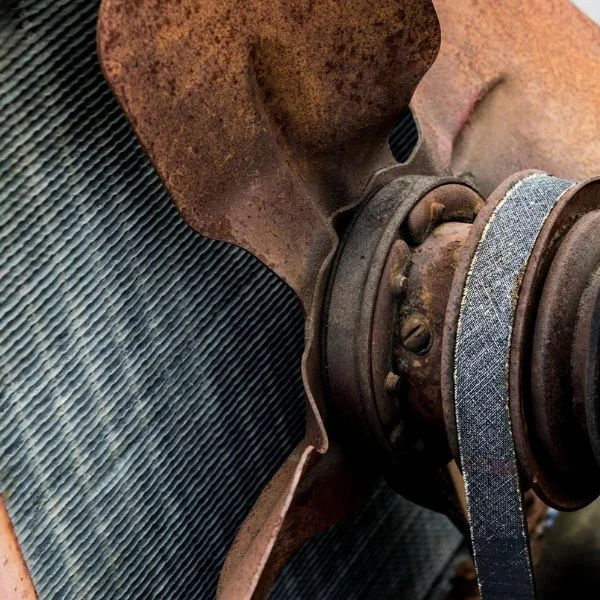
Radiator Fan: Blowing air directly at the radiator, the radiator fan helps disperse heat with airflow. Keeping the engine cool is a multi-component mission.
Radiator Hoses: Just like the old saying that a chain is only as strong as its weakest link, the same can be said for the cooling system. Radiator hoses have the duty of carrying fluid throughout the system. Any leaks in the hoses will compromise the cooling ability of the system.
Radiator: When coolant arrives to the radiator, it’s at peak levels of heat. The radiator needs to reduce the excessive heat efficiently and as quickly as possible. Radiators have metal fins that absorb heat. Fins increase surface area within the radiator for more heat absorption yet are quite thin to allow maximum coolant flow with minimal restriction. Vents in the radiator allow for heat to be released. Once heat escapes containment in the radiator, the radiator fan blows it away to reduce its effects.
Radiators are critical components in tractor cooling systems
The bottom line is that radiators work in conjunction with many other parts in the tractor cooling system. They play a critical role in maintaining an optimal temperature in your engine. If your radiator develops rust, corrosion or leaks, it won’t be able to do its job of releasing excessive heat. Over the life of a tractor, you’ll occasionally need to replace your radiator. It’s always a good idea to routinely inspect your radiator for any signs of deterioration.
Return to the Buying Guide main page.